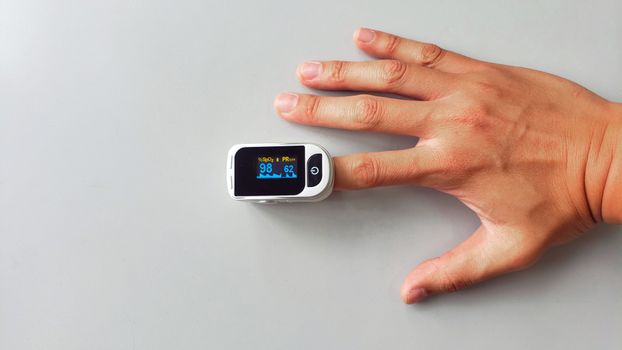
MAX30102 Sensor Review: DIY Blood Oxygen & Heart Rate Monitor
Have you ever wondered what’s happening inside your body during a workout, a stressful moment, or even a good night’s sleep? For decades, the tools to answer those questions—heart rate monitors, pulse oximeters, ECG devices—were locked away in clinics or priced for professionals. Not anymore.
Welcome to the new frontier of personal health tech, where understanding your own biometrics starts not with a huge investment, but with curiosity and a little bit of DIY spirit. Today, we’re diving deep into an intriguing entry point: the MAX30102 Blood Oxygen & Heart Rate Sensor Module. This isn’t a polished consumer gadget you strap on; it’s the raw, powerful engine that makes those gadgets work, now available for you to tinker with, learn from, and build into your own projects.
Unpacking the MAX30102: The “Brain” of a Health Monitor
At its core, the MAX30102 is a highly sophisticated optical sensor. It uses a technology called photoplethysmography (PPG)—the same principle behind the glowing green lights on your fitness tracker. By emitting red and infrared light into your skin and measuring how it’s absorbed by your blood, it can calculate your pulse rate and blood oxygen saturation (SpO2).
This module brings that professional-grade sensor component to your workbench. It’s designed to be interfaced with popular microcontroller boards like Arduino UNO R3 or STM32, making it a fantastic tool for:
- Students and hobbyists learning about biomedical engineering.
- Makers wanting to create custom health monitors.
- Developers prototyping wellness devices.
- Anyone curious about the fundamental technology behind wearables.
MAX30102 Sensor Module at a Glance
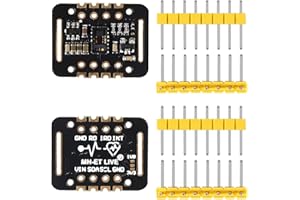
| Feature | Details |
|---|---|
| Product Name | MAX30102 Blood Oxygen Wrist Heart Rate Sensor Module (2pcs) |
| Core Function | Pulse (HR) & Blood Oxygen (SpO2) Detection |
| Compatibility | Arduino UNO R3, STM32, other 3.3V/5V microcontrollers |
| Price | $13.99 (for 2 modules) |
| Amazon Rating | 3.8 stars (4 reviews) |
| Review Tier | New Product – An exciting, low-cost entry into biometric sensing for makers. |
| Best For | DIY enthusiasts, students, prototyping, educational projects. |
The Deep Dive: Pros, Cons, and Who It’s Really For
Let’s be clear: this is not a plug-and-play health device for the average consumer. Its value and challenges are two sides of the same coin.
✅ The Advantages (Game-Changer for Makers)
Extreme Affordability: At roughly $7 per sensor, you get access to technology that rivals sensors in devices costing 10x more. It’s an unparalleled value for learning.
Educational Powerhouse: There’s no better way to understand PPG, signal processing, and heart rate algorithms than by building a system from the ground up. The online community support (forums, GitHub code libraries) is vast.
Flexibility & Customization: You’re not locked into one device’s design. You can build a wristband, a finger clip, or integrate it into other projects. You control the data output and how it’s displayed.
Dual-Pack Advantage: Getting two modules means you can experiment, have a backup, or set up a comparative testing rig.
⚠️ The Considerations (Know Before You Buy)
Requires Technical Skill: You must be comfortable with soldering (for headers), basic wiring, and uploading code to a microcontroller. This is a fundamental requirement.
Not a Finished Product: You will need an Arduino/STM32 board, jumper wires, and possibly a display module to see readings. The total project cost is more than just the sensor.
New Product Status: With only a handful of reviews, it’s a newer listing. While the MAX30102 chip itself is proven, the quality of this specific module’s manufacturing and support is still establishing its track record.
Accuracy is Project-Dependent: The raw sensor is precise, but the accuracy of your final readings depends entirely on your code, signal filtering, and device design. It’s for informational/educational use, not medical diagnosis.
Also Consider: From DIY to Clinical-Grade
If the hands-on DIY approach isn’t for you, or you need a ready-to-use, medically-focused device, the market has incredible options. Here’s a comparison of standout alternatives to fit different needs and budgets.
| Product | Price | Key Features | Amazon Rating | Best For |
|---|---|---|---|---|
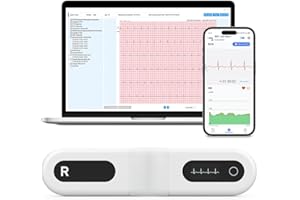
|
$429.99 | 72-hour continuous ECG, AI analysis, clinical-grade data. | 4.6 (20 reviews) | Those needing extended, professional cardiac monitoring. |
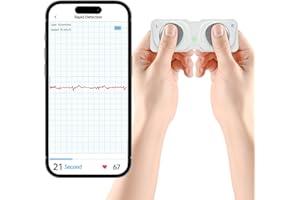
|
$87.65 | Wireless, 30-second AFib detection, compact design. | 5.0 (2 reviews) | Budget-conscious users seeking simple, fast AFib screening. |

|
$99.00 | Health Canada licensed, detects AFib, instant results. | 4.2 (862 reviews) | The gold standard for reliable, at-home instant ECG. Trusted by many. |

|
$169.00 | 6-lead data for more detailed heart rhythm analysis. | 4.5 (381 reviews) | Users wanting more clinical detail than a 1-lead can provide. |
|
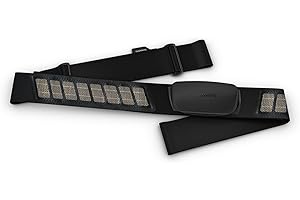
$79.99 | Bluetooth & ANT+, accurate heart rate for fitness. | 4.2 (23,581 reviews) | Athletes and fitness enthusiasts needing accurate, real-time HR data for training. |
Take the Next Step Toward the Right Product
Your journey into health monitoring starts by identifying your true goal.
Is it the thrill of creation and learning? The MAX30102 module is your canvas.
Is it peace of mind with clinical-grade tools? The KardiaMobile series, backed by thousands of user experiences, is a trusted companion.
Is it serious athletic training? The Garmin HRM-Dual’s legendary reliability is your answer.
The power to understand your heart’s rhythm and your body’s signals is now on your table—whether that’s a maker’s workbench or your bedside nightstand. Choose the tool that matches your curiosity, your needs, and your skill level.
Ready to build, monitor, or understand? Click on any link above to explore your chosen path and take control of your health data today.
Related Posts