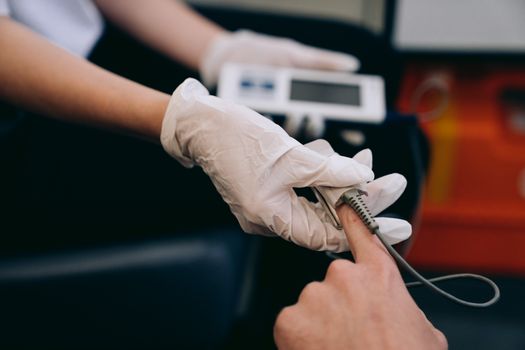
Beginner’s Guide: Pulse Oximeter vs. Chest Strap Heart Monitor
Are you new to tracking your heart and health? It can feel overwhelming. There are so many devices, each promising different things. Do you need to check your blood oxygen at home? Or are you starting a new fitness journey and want to track your heart rate during workouts?
For a beginner, the choice often comes down to two popular and affordable tools: the finger pulse oximeter and the chest strap heart rate monitor. They serve different, but equally important, purposes. One is for monitoring your health at rest, the other for tracking your effort in motion.
This guide cuts through the confusion. We’ll compare two established bestsellers on the market to help you understand which device—or perhaps both—fits your new lifestyle.


Quick Comparison: At a Glance
| Feature |
 LOOKEE A310 Pulse Oximeter |
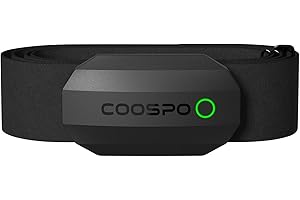 COOSPO Heart Rate Monitor Chest Strap |
|---|---|---|
| Type | Finger-clip Oximeter | Chest Strap Monitor |
| Primary Use | Spot-checking SpO2 & Pulse at rest | Continuous heart rate during exercise |
| Key Metrics | Blood Oxygen (SpO2), Pulse Rate, Perfusion Index | Heart Rate (HR) only |
| Display | Built-in OLED Screen | No display; transmits to phone/watch/app |
| Connectivity | None (standalone device) | Bluetooth & ANT+ |
| Best For | Health monitoring, peace of mind, post-illness recovery | Running, cycling, gym workouts, fitness apps |
| Comfort & Wear | Clip on finger for 10-20 seconds | Worn around chest during activity |
| Price (approx.) | $39.97 | $42.99 |
| Rating & Reviews | 4.7 stars (754+ reviews) | 3.9 stars (966+ reviews) |
| Review Tier | Established Bestseller | Established Bestseller |
Product Deep Dive: What Makes Them Great?
Let’s look at each device in more detail. Both are community-tested favorites, but they excel in their own lanes.
LOOKEE A310 Premium Pulse Oximeter
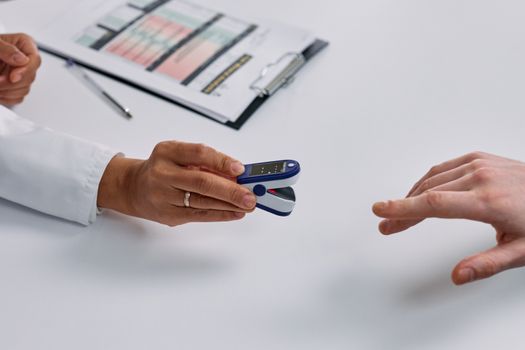
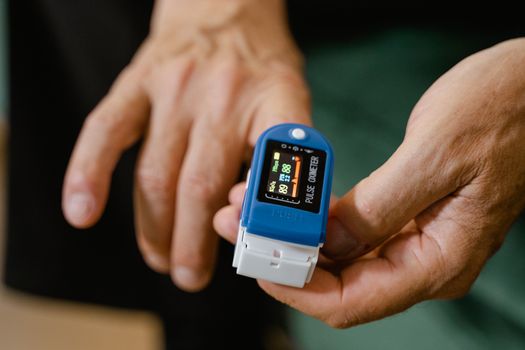
This little blue device is a household staple for thousands. With over 750 glowing reviews, it’s trusted for its medical-grade accuracy and dead-simple operation. Think of it as a personal vital signs checker you can keep in a drawer.
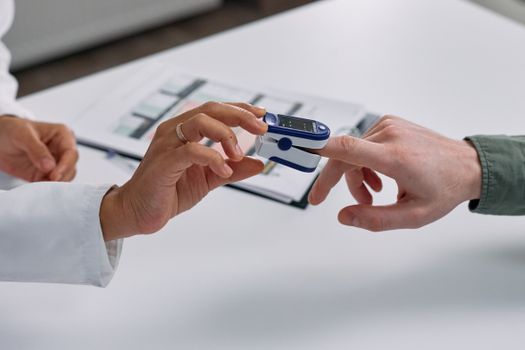
You simply clip it on your finger, press the button, and in seconds you get clear readings for your Blood Oxygen Saturation (SpO2) and Pulse Rate on a bright OLED screen. It’s not for wearing during a workout, but for answering important questions: Is my oxygen level normal? How fast is my heart beating while I’m sitting here?
Why beginners love it:
- It’s foolproof. No pairing, no apps, no charging. It uses included batteries and works right out of the box.
- It provides crucial health data. Monitoring SpO2 has become a common practice for general wellness, especially after respiratory illnesses.
- It’s portable and complete. It comes with a protective case, lanyard, and batteries—everything you need.
Pros
- Extremely simple to use; ideal for non-tech-savvy users.
- Provides SpO2 reading, which a chest strap cannot.
- High accuracy for a consumer device.
- Comes with a handy carry case.
- No charging or connectivity required.
Cons
- Not designed for continuous monitoring during exercise.
- Only gives a spot-check reading, not a continuous stream of data.
COOSPO Heart Rate Monitor Chest Strap
If your goal is to get fit, this is your tool. With nearly 1,000 reviews, this chest strap is a workout companion for runners, cyclists, and fitness app users. It doesn’t have a screen itself. Instead, it transmits your real-time heart rate data directly to your smartphone, smartwatch, or fitness equipment like a Peloton bike.
Why a chest strap? It’s widely considered the gold standard for accuracy during intense exercise compared to wrist-based optical sensors (like on a smartwatch). It measures the electrical activity of your heart, just like an ECG.
Why beginners love it:
- It unlocks better training. See if you’re in the fat-burning zone, pushing too hard, or not hard enough.
- It works with everything. Its dual Bluetooth & ANT+ connectivity means it pairs with almost any fitness app (Strava, Zwift, Peloton, Polar Beat) or gym equipment.
- It’s durable and comfortable. Rated IP67 for sweat and rain resistance, with a soft, adjustable strap.
Pros
- Excellent accuracy for heart rate during movement.
- Extremely broad compatibility with apps and devices.
- Comfortable for long workouts and resistant to sweat.
- Long battery life (uses a common CR2032 battery).
Cons
- Requires a paired device (phone, watch) to see your heart rate.
- Does not measure blood oxygen (SpO2).
- Needs to be worn with moisture (sweat or water) for best conductivity.
Which is Best for You? The Simple Choice Guide
Still unsure? Let’s match the device to your lifestyle.
Choose the LOOKEE Pulse Oximeter if…
- Your primary concern is general health and wellness monitoring at rest.
- You want to track blood oxygen levels (SpO2) specifically.
- You prefer a no-fuss, instant-read device with no apps or setup.
- You need it for occasional check-ins, not continuous workout tracking.
Choose the COOSPO Chest Strap if…
- You are beginning a running, cycling, or gym-based fitness program.
- You want accurate, real-time heart rate data to improve your workouts.
- You already use (or want to use) fitness apps like Strava, Peloton, or Zwift.
- You don’t mind pairing a device with your phone or watch.
Final Verdict & Your Next Step
Think of it this way: the LOOKEE oximeter is for health diagnostics (answering “how am I?”), and the COOSPO chest strap is for fitness analytics (answering “how hard am I working?”). They are complementary tools for a complete picture of your well-being.
For a true beginner focused on overall health, the LOOKEE provides immense value and peace of mind with zero complexity. For a beginner focused on fitness and cardio training, the COOSPO is an investment that will make your workouts more effective and insightful.
Both are proven, bestselling choices with strong community backing, so you can buy with confidence. Your journey to better health awareness starts with the right tool.
Related Posts