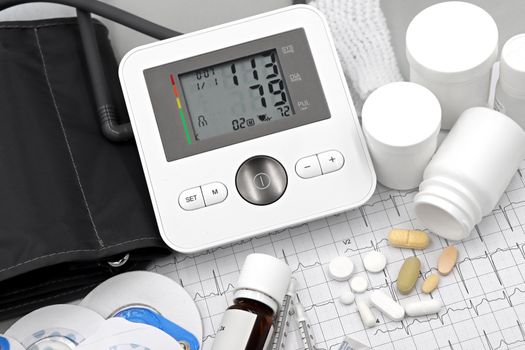
Beginner’s Guide to Heart Rate Monitors: DIY Module vs. Medical-Grade ECG
Looking for your first heart rate monitor? Our beginner-friendly comparison breaks down a popular DIY sensor module and a top-selling personal ECG device to help you find the best fit for your health and hobby projects.
Finding the Right Tool for Your Goal
Getting started with health tech can feel like stepping into a foreign language. Pulse, ECG, SpO2—what does it all mean, and more importantly, what do you actually need? As a beginner, your choice often comes down to your goal: are you looking to tinker and learn, or are you seeking reliable, actionable health data?
Today, we’re comparing two very different devices that sit in the “heart rate monitor” category. One is a hands-on component for tech projects, and the other is a clinically-proven at-home medical device. Understanding this core difference is the first step to a confident decision.
Head-to-Head Comparison at a Glance
The table below summarizes the key differences. This isn’t about one being universally “better,” but about which tool is right for the job you have in mind.
| Feature | MAX30102 Sensor Module (2pcs) | AliveCor KardiaMobile ECG |
|---|---|---|
| Primary Use | DIY Electronics & Learning | Personal Heart Health Monitoring |
| Price | $13.99 | $89.99 |
| Best For | Makers, students, coding enthusiasts | Anyone wanting to monitor heart rhythm (like AFib) easily |
| Ease of Use | Requires assembly, coding & hardware knowledge | No setup; place fingers on device for 30 seconds |
| Data Output | Raw sensor data (needs processing) | Medical-grade ECG graph & instant analysis |
| Key Metrics | Heart rate, blood oxygen (pulse oximetry) | ECG rhythm to detect AFib, Bradycardia, Tachycardia |
| Community Trust (Reviews) | New Product: Few early reviews (4 total) | Established Bestseller: Over 79,000 reviews (4.4 stars) |



Product Deep Dive: Two Different Worlds
Let’s explore each option in detail to understand what you’re really getting.
1. For the Maker & Learner: MAX30102 Sensor Module
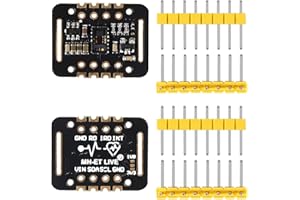
This isn’t a ready-to-use gadget; it’s a component. Think of it as a bundle of potential that arrives on a small blue circuit board. You get two modules, which is fantastic for prototyping or collaborating on a project.
What makes it intriguing for beginners? It’s a hands-on introduction to biometric sensing. You can learn how devices like smartwatches measure pulse and blood oxygen (SpO2) from the ground up. By connecting it to an Arduino (like the UNO R3) or STM32 board and writing some code, you can read raw data and turn it into a working heart rate monitor.
Pros
- Extremely affordable entry into health sensor technology.
- Great educational value for understanding photoplethysmography (PPG) – the tech behind many optical heart rate sensors.
- Two modules allow for experimentation or backup.
- Measures both heart rate and blood oxygen saturation.
Cons
- No instructions or software included. You must source code and tutorials independently.
- Accuracy depends entirely on your setup and code. It’s not a calibrated medical device.
- “New Product” Status: With only a handful of reviews, its long-term reliability as a component is still being established by the community.
Ideal for: The curious tinkerer, the engineering student, or the hobbyist who loves the journey of building as much as the result.
2. For Peace of Mind & Health Insight: AliveCor KardiaMobile
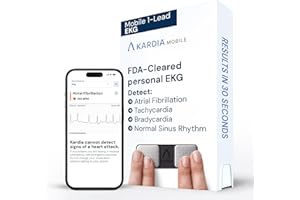
This is where technology meets tangible health empowerment. The KardiaMobile is a finished product with one job: to give you a medical-grade electrocardiogram (ECG) anytime, anywhere. It’s the size of a credit card and requires no charging.
Why is it a top choice for beginners to health monitoring? Its simplicity is revolutionary. You download the free app, place your fingers on the metal electrodes for 30 seconds, and receive an instant analysis. It can detect signs of Atrial Fibrillation (AFib), Bradycardia, and Tachycardia—conditions that a simple pulse check might miss.
This is an “established bestseller” for a reason. With over 79,000 reviews and a 4.4-star rating, it has earned immense trust. This volume of feedback speaks to its reliability, ease of use, and real-world value for people managing their heart health or those who want a check-in tool.
Pros
- Clinically proven accuracy and FDA-cleared.
- Dead-simple to use – no setup, no wires, no technical knowledge needed.
- Provides actionable data you can share with your doctor.
- FSA/HSA eligible, making it more affordable with pre-tax health accounts.
- Massive social proof from a vast user community.
Cons
- Higher upfront cost compared to a DIY component.
- Focused solely on ECG rhythm; it does not measure blood oxygen or continuous heart rate during exercise.
Ideal for: Anyone, especially beginners to health tracking, who wants a reliable, no-fuss tool for monitoring heart rhythm. It’s perfect for those with a family history of heart issues, or individuals who experience occasional palpitations and want to capture data.
Which Heart Rate Monitor is Best for You?
Your decision tree is actually quite simple:
Choose the MAX30102 Sensor Module if:
- Your goal is learning and building.
- You enjoy coding (or want to learn) and working with hardware like Arduino.
- You’re fascinated by how biometric sensors work.
- Your budget is tight and you value the educational experience over clinical-grade data.
Choose the AliveCor KardiaMobile if:
- Your goal is managing or understanding your personal health.
- You want accurate, doctor-shareable data with zero technical hassle.
- You value peace of mind and a tool backed by massive user trust.
- You or a loved one could benefit from easy, at-home rhythm checks.
Final Verdict & Your Next Step
As a beginner, the most important thing is to align the tool with your true objective. Are you building a skill, or are you gathering health insights? Both are valid paths, but they require different tools.
- For the DIY enthusiast and learner, the MAX30102 offers an unbeatable price to start a fascinating project.
- For the health-conscious individual seeking reliable, immediate heart rhythm monitoring, the KardiaMobile is the undisputed, community-trusted choice.
Learn more and make your pick today. Your journey into health technology starts with a single click.
Related Posts