Home Blood Oxygen Monitors: Simple Oximeter vs. DIY Sensor Compared
Instant health snapshots vs. build-it-yourself potential: Find your perfect home monitoring tool.

The Ready-to-Use Oximeter

The DIY Sensor Module
Why Your Home Health Kit Needs a Pulse Oximeter
You’re not a doctor, but you’re the CEO of your own household’s health. Between checking on an active parent, monitoring your own recovery, or just being more proactive about wellness, having a way to check blood oxygen and heart rate at home brings a powerful sense of control. It’s not about replacing your physician; it’s about having a simple, reliable data point when you need it.
But the market can be confusing. Do you buy a finished, ready-to-use device, or are you the tinkering type who prefers building things yourself? Today, we’re comparing two distinct approaches to at-home monitoring: a turn-key finger oximeter and a sensor module for tech enthusiasts. Let’s find which tool belongs in your home toolkit.
At-a-Glance Comparison
Here’s a quick snapshot of our two contenders. This table highlights the core differences to help you understand the fundamental choice you’re making.
| Feature | Oxygen Meter Finger Monitor | MAX30102 Sensor Module |
|---|---|---|
| Best For | Direct, instant use | DIY projects & tinkering |
| Form Factor | Complete finger-clip device | Raw electronic component |
| Price | $23.99 | $13.99 (for 2) |
| Ease of Use | Plug-and-play, portable | Requires coding & assembly |
| Amazon Rating | 4.6 stars (95 reviews) | 3.8 stars (4 reviews) |
The Contenders: In-Depth Look
Let’s break down what each product offers and who it’s truly meant for.
1. Oxygen Meter Finger Monitor: The Grab-and-Go Health Snapshot
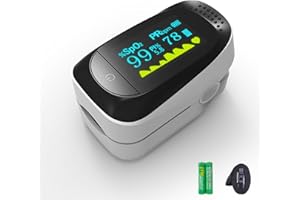
This is the device you’re probably picturing when you think of a home pulse oximeter. It’s a complete package designed for one purpose: to give you a fast, accurate reading of your blood oxygen saturation (SpO2) and pulse rate with the press of a button.
Pros
- True Plug-and-Play: No setup, no software, no assembly. Instant readings.
- Portable & User-Friendly: Ergonomic shape, easy-to-read OLED display.
- Strong Early Reliability: High rating based on significant user feedback.
- Complete Solution: Comes with batteries and accessories.
Cons
- Fixed Functionality: It does one thing (but does it well).
- Less Customizable: You can’t tweak its data output or integrate it with other apps.
Ready for instant peace of mind?
2. MAX30102 Sensor Module: The Builder’s Blank Canvas
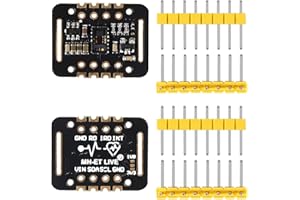
This is not a consumer device. It’s the powerful sensor chip used inside many commercial wearables, sold here as a module for makers, students, and tech hobbyists. You get the core technology without the polished casing or software.
Pros
- Extreme Flexibility: Can be integrated into countless DIY projects (wearables, IoT devices).
- Low-Cost Core Tech: Access to professional-grade sensor technology at a very low price.
- Educational Value: Fantastic for learning about biometrics, electronics, and coding.
- Two-Pack: Great for prototyping, having a backup, or collaborating.
Cons
- Not Ready-to-Use: Requires significant technical knowledge (coding, soldering, electronics).
- No Enclosure/Display: You must build the entire user interface yourself.
- Limited Consumer Support: It’s a component, not a supported product.
Ready to build your own health tech?
Which Is Best For You?
This isn’t a contest where one product is objectively “better.” It’s about matching the tool to the person.
Choose the Oxygen Meter Finger Monitor if:
- You want instant, reliable readings without any fuss.
- Your primary users are not technically inclined.
- You need something to quickly check on family members.
- You value portability and simplicity over customization.
- The strong positive feedback from early adopters gives you confidence.
Choose the MAX30102 Sensor Module if:
- You see yourself as a maker, tinkerer, or student.
- You have experience with Arduino, Raspberry Pi, or STM32 platforms.
- You want to build a custom project (e.g., a specialized baby monitor, a gaming biofeedback device).
- You’re excited by the process of creation and integration as much as the result.
- You understand it’s a component and are prepared for a hands-on challenge.
Final Verdict & Your Next Step
For the vast majority of home users, the clear and practical choice is the Oxygen Meter Finger Monitor. It solves the core problem—easy health monitoring—immediately and effectively. Its design and strong early reviews make it a trustworthy item to have in your medicine cabinet.
The MAX30102 Module is a fascinating and powerful option, but it’s a specialty tool. It’s for the person who reads “compatible with UNO R3” and gets excited about the possibilities, not confused by the terminology.
Ready to Make Your Choice?
Whether you need instant clarity or a box of potential, the best next step is to see the latest prices, specs, and user reviews directly on Amazon.
Related Posts